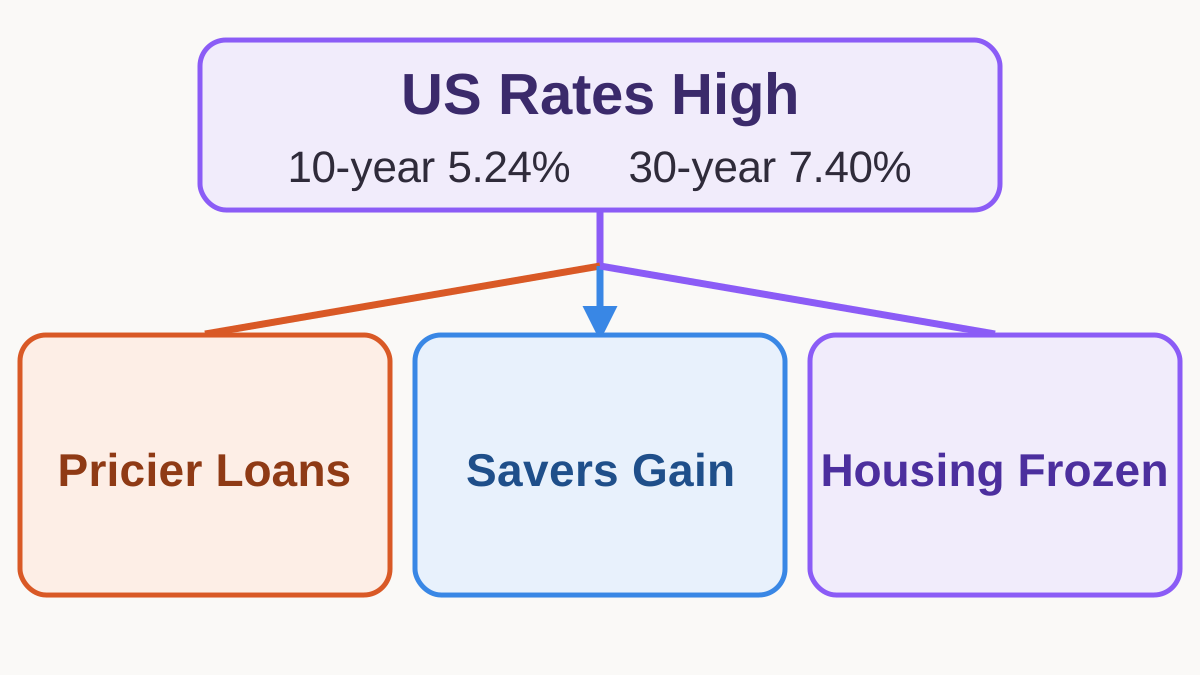
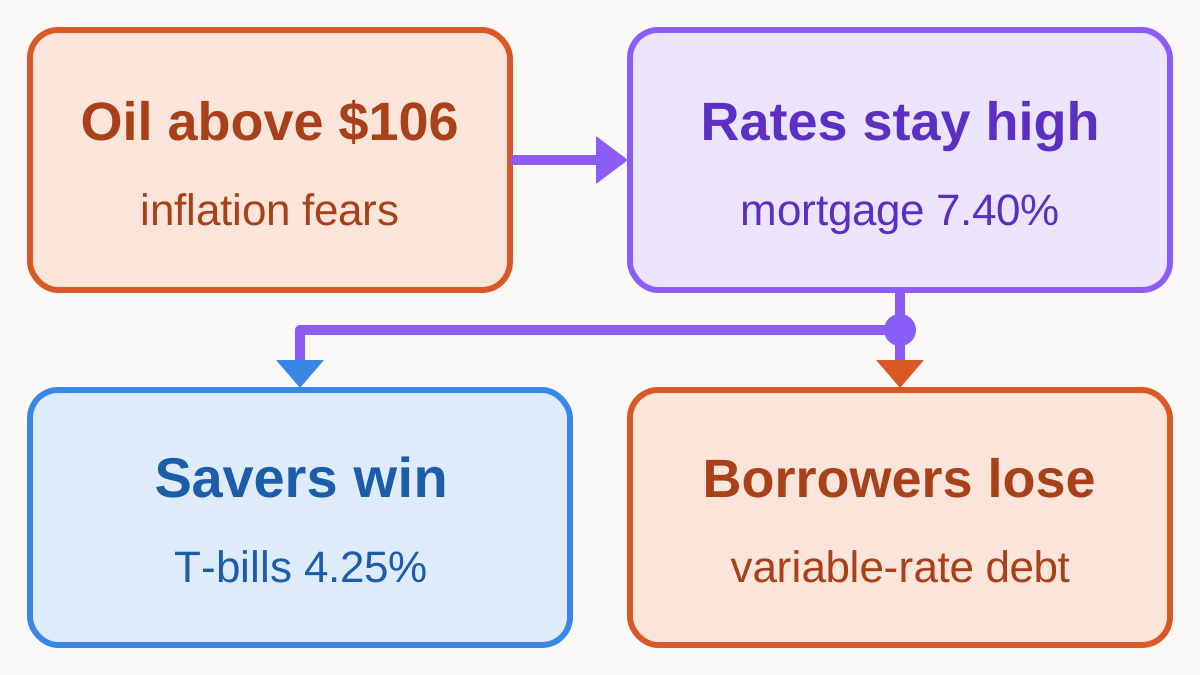
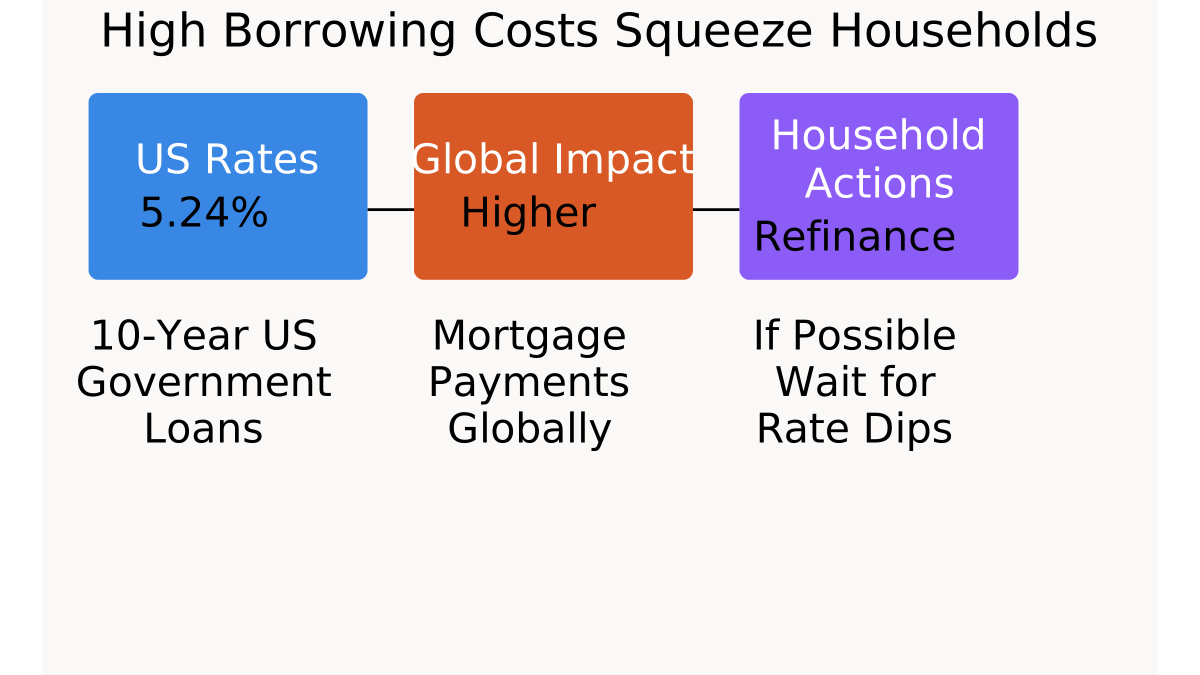
Conclusion: Treat these borrowing costs as a warning to strengthen household finances, not as proof that interest rates can only rise. The 10-year Treasury yield influences long-term borrowing costs, but mortgage rates also depend on mortgage-backed securities, inflation expectations, and lenders' pricing (reuters.com).
For American households, the impact is immediate. On a $300,000, 30-year fixed mortgage, principal and interest at 7.40% cost approximately $2,077 monthly, compared with $1,857 at 6.30%—about $220 more every month, or $2,640 annually, before taxes, insurance, and other housing expenses.
These calculations use Freddie Mac's October 8 mortgage rate and its reported year-earlier comparison (freddiemac.gcs-web.com).
If buying a home, calculate affordability using today's actual lender quotes, not an assumed future rate cut. Compare multiple Loan Estimates, including APR, upfront charges, and five-year borrowing costs; CFPB provides a standardized comparison method (consumerfinance.gov).
Negotiate where possible, and do not buy if the payment leaves you financially fragile. Waiting may help if rates decline, but prices, rents, and your personal circumstances can change too.
If you have debt, prioritize expensive revolving balances when financially feasible. Check whether loans and credit cards have variable rates, and understand when their terms can change (consumerfinance.gov).
Existing fixed-rate borrowers generally need not refinance simply because market rates change; compare all costs before making a move (consumerfinance.gov).
Savers have an opportunity, but only when their institutions pass higher rates through to deposit accounts. Compare insured savings accounts and certificates of deposit, checking access restrictions and early-withdrawal penalties.
On October 12, the Wall Street Journal reported average yields of 4.01% among leading savings accounts, with offers reaching 5%, compared with an FDIC national average of 0.38% (wsj.com).
Outside America, effects are indirect but significant. Rising US yields and a stronger dollar can draw investment away from emerging markets, increase pressure on dollar borrowers, and complicate domestic monetary policy.
Reuters reported $26.3 billion in emerging-market portfolio outflows in September, associated with a more hawkish Federal Reserve and rising US yields and dollar (reuters.com). Local outcomes will vary; US rates do not automatically determine every country's mortgage rates.
What happens next? Expect volatility rather than a dependable one-way trend. Oil prices, inflation expectations, Federal Reserve policy, and bond-market positioning are important competing influences (reuters.com).
The prudent approach is to budget for persistently expensive borrowing while retaining flexibility if rates eventually decline. Avoid betting household solvency on a particular market forecast.
Sources
- investinglive.com
- home.treasury.gov
- freddiemac.com
- freddiemac.gcs-web.com
- reuters.com
- reuters.com
- reuters.com
- consumerfinance.gov
- consumerfinance.gov
- consumerfinance.gov
- wsj.com
- pageviews.wmcloud.org
Its own forecast: The US Treasury's official Daily Treasury Par Yield Curve Rates will show a 10-year par yield of 5.00% or lower on at least one published trading day between October 13 and November 12, 2026, inclusive. — 35% chance by Nov 12, 2026