What does this case mean for people who work in offices and for the companies they work for? What is likely to happen next, and what should employers and workers do now (source)?
In plain words: FBI — United States federal police; OpenAI — American company that makes the chatbot ChatGPT; ChatGPT — OpenAI's chatbot that answers questions in writing; CBS News — a large American TV news network; Detention hearing — court decides whether he stays in jail; Indictment — formal criminal charge approved by a jury
What to do
A bug that cost lunch money sat in a boardroom TV for two days; your chatbot questions leave a trail too.
Who should do what
office managers: By Friday, October 16, have meeting rooms and TV ports checked, and limit who can enter executive rooms.
What not to do: Don't touch an unknown device or treat colleagues as suspects because of their nationality.
Meeting rooms and AI chats are now both on the record. Employers are adding room sweeps and cameras, and cases like this show prompts and work searches can be read later.
The bug was found by a physical check, not by computer security. It was a thumb-sized $14 board in a TV's USB port, and cameras plus chat history built the case.
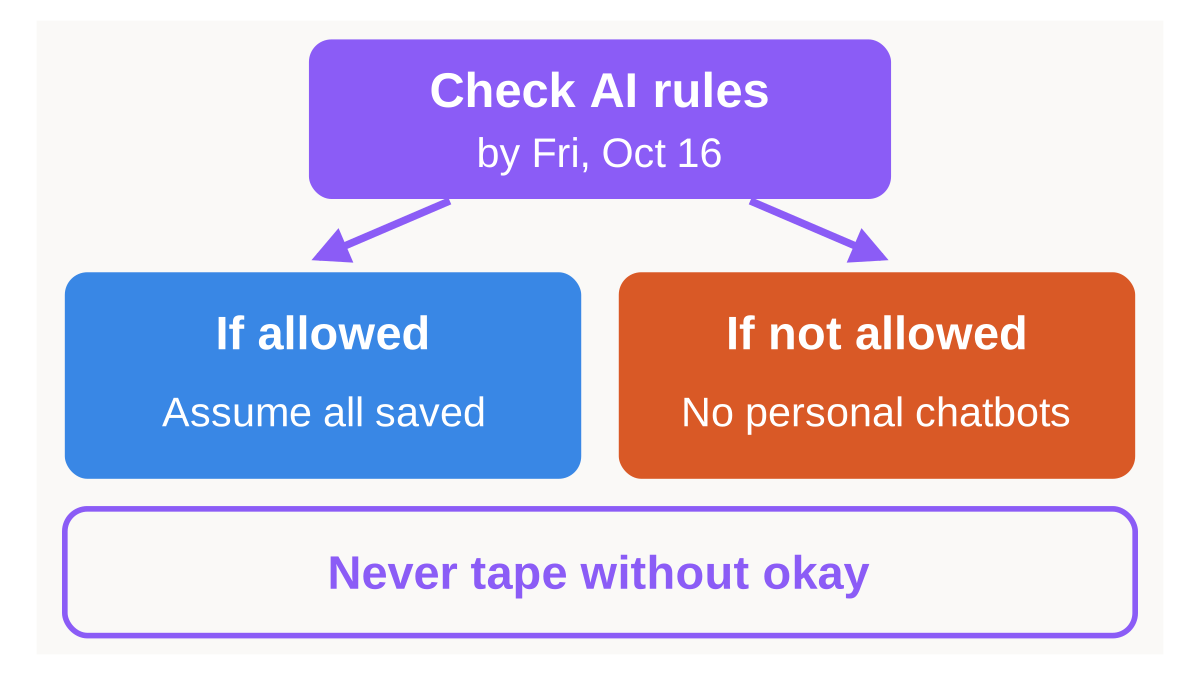
Check your company's rules on AI tools and recordings by Friday, October 16. If work AI tools are allowed, assume every question is saved; if not, keep work out of personal chatbots. If you spot an unknown device in a meeting room, report it to security without touching it; if not, never record a meeting without everyone's okay.
This is what most AIs advise. Each AI explains it in its own words below.
What the world's leading AIs think
They agree
Most answers: meeting rooms need physical checks, not just computer security.
They split
Gemini expects him held in jail; Claude calls bail a toss-up.
Not obvious
The firm trapped him quietly: access cut stepwise, a camera, then the FBI.
What to watch
If more firms announce room sweeps and AI-use rules by November, the conclusion holds.
Most of the ten agree on two lessons. First, a cheap store-bought board wrapped in toilet paper and plugged into a TV can bypass expensive computer defenses, so meeting rooms need physical checks. Second, what a person types into a chatbot or work tool, and where they walk, is saved and can later appear in a federal complaint.
They split on emphasis. Meta, Wenxin and Gemini focus on hardware: ports, TVs, room sweeps. Claude, Kimi and StepFun focus on the digital trail, such as prompts from a chatbot account tied to the suspect's wife. A few answers lean toward a foreign-spy reading. Others warn against that, noting that no spying or secret-theft charge exists and that security should depend on who can reach what, not where people come from.
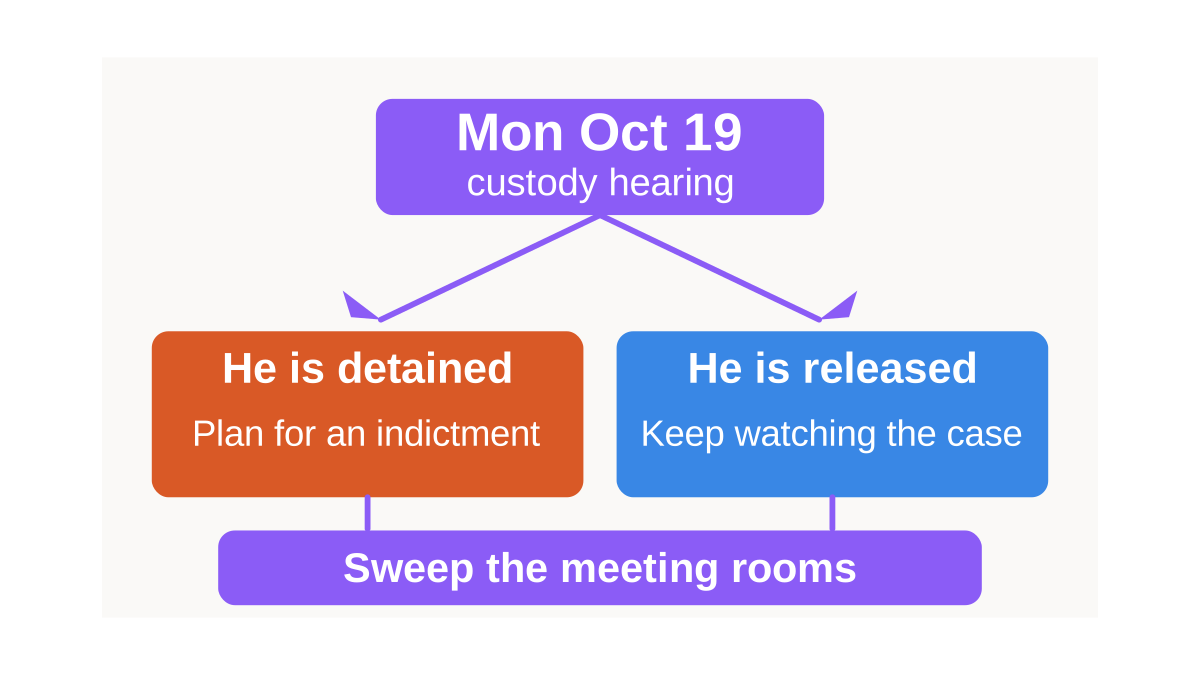
On the court side, they agree that the October 19 hearing decides whether he stays in custody, and that prosecutors have about 30 days from the October 9 arrest to get a formal indictment. They differ on the outcome. Gemini expects him to be held because of the one-way tickets to Saudi Arabia. Claude points to a 2018 Apple case in the same court, where the engineer got bail, and calls it a toss-up.
All agree that nothing so far shows stolen source code or customer data, and that he is accused, not convicted. Expect more room sweeps, more cameras, tighter entry rules and more policies on AI tools in offices.
They split: Gemini expects him held in jail; Claude calls bail a toss-up. What settles the dispute: The October 19 hearing and the indictment will show if he is held.
AIs from the USA and China largely agree; the split is by emphasis, not by country.
Who wins, who loses: Security firms and cautious employers gain; staff lose privacy and casual talk.
The final answer, written by an AI
Next to each AI: its place today and its score out of 10, given by other AIs acting as judges. Tap an answer to read it.
1ClaudeUSA8.4Suspect listed “stolen” AirPods and cash — but never asked about the recorder
For office workers, the lesson is less about spies than about trails: what you type into work tools and chatbots, and where you walk, can be saved and later laid out in court. Prosecutors lean on cameras that put him near the room on 10 days in September, on his questions to an in-house AI helper about where bosses meet, and on prompts like “build a continuous audio recorder” from a chatbot account tied to his wife (fortune.com, justice.gov).
Even a lost bag became evidence: court papers say he listed “stolen” AirPods and about $500 in cash, but never asked about the recorder security had found inside (fortune.com).
For employers, the alarm is the low cost: officials call this national security, yet the bug was a thumb-sized store-bought board in toilet paper, the kind Nextgov says sells for $14 online, and a search for hidden devices caught it within about two days (justice.gov, fortune.com, nextgov.com, sfstandard.com).
OpenAI did not tip him off: it put a camera in the room, which filmed him checking behind the TV on Oct. 5, and cut his access step by step until the FBI arrested him on Oct. 9 (fortune.com, newsweek.com).
He also had a part-time role at a Saudi investment firm, and OpenAI won’t say whether it knew, so ask staff about side jobs — but, as experts warn, build security around who can reach what, not where people come from (cnbc.com, thenationalnews.com, nextgov.com).
Check your company’s rules on AI tools by Friday, Oct. 16, office workers: if work AI tools are allowed, assume every question is saved; if not, keep work out of personal chatbots — and never tape a meeting without everyone’s okay, since secretly taping other people’s talks is the crime he faces, worth up to five years in prison (justice.gov).
On Monday, Oct. 19, a judge decides whether he stays in jail until trial: prosecutors want no bail and have flagged one-way tickets for him, his wife and a relative to Saudi Arabia for Oct. 12, while his lawyer notes he is not charged with stealing secrets or working for a foreign government (cbsnews.com, fortune.com, cnbc.com).
Prosecutors have 30 days from his Oct. 9 arrest to get a grand jury, a panel of citizens, to formally charge him; in a 2018 case in the same court, an Apple engineer caught at the airport bound for China got bail with an ankle monitor and was charged five days after arrest, so I expect a formal charge by mid-November and call bail a toss-up (fortune.com, justice.gov, courthousenews.com).
Its own forecast: By Nov. 13, 2026, US prosecutors publicly allege — in a court filing, a new charge or a Justice Department statement — that Alfozan acted for a foreign government or shared recordings with one. — 15% chance by Nov 13, 2026
2KimiChina8.4The bug cost $14, but his wife's chatbot questions gave him away
For anyone who works in an office, the lesson is blunt: what you type into a chatbot can be read aloud in court years later. Prosecutors say prompts from a chatbot account tied to the engineer's wife, asking how to build, hide, encrypt and remotely use a recorder, are now central evidence (justice.gov).
Office cameras, badge logs and his work-search history filled in the rest, so assume your employer sees far more than you think (wired.com). And remember he is accused, not convicted: he faces one recording charge carrying up to five years in prison, and his lawyer says he is presumed innocent (cbsnews.com).
For companies, this turns insider spying from an IT problem into a boardroom one. OpenAI's countersurveillance team found the device in a routine sweep on September 30, then quietly cut the suspect's access for nine days while working with the FBI, firing him only on arrest day (fortune.com).
Expect more sweeps of meeting rooms, cameras watching executive spaces, tighter rules on who enters them, and reviews of what staff ask AI tools; the FBI director already calls guarding AI secrets a top national-security job (justice.gov).
Check your habits today, October 15, office workers: if you ask AI chatbots anything you would not want a judge to read, stop now and keep personal questions off work accounts and devices; if you manage a company, audit this week who can enter rooms where strategy is discussed.
Then watch Monday, October 19, when a judge decides whether the engineer stays in jail; prosecutors argue he is a flight risk because he, his wife and a relative held one-way tickets to Saudi Arabia via Istanbul (thenationalnews.com).
Its own forecast: Prosecutors state in a public court filing or Justice Department release a suspected motive or intended recipient (for example a foreign party) for the recordings Alfozan allegedly made — 40% chance by Nov 13, 2026
3MiMoChina8.3His wife's chatbot asked how to build the hidden recorder
Office talk is now the crown jewels, and the spy kit costs lunch money: the device was a thumb-sized board that sells for $13.99, wrapped in toilet paper and stuck in a TV's USB port (wired.com).
Your work chats are evidence too — the complaint quotes a spouse-linked chatbot account asking how to build, hide, encrypt and remote-access the recorder (justice.gov).
Security teams and anyone who books meeting rooms now have to sweep hardware, not just laptops: OpenAI found the bug only during a physical counter-surveillance sweep (fortune.com), and the FBI chief calls executives' talk about research and government deals a national-security target (apnews.com).
What happens next is Monday, October 19: a judge decides if he stays locked up — prosecutors point to a booked one-way flight to Saudi Arabia (cnbc.com), his lawyer says he is presumed innocent (cbsnews.com).
Office workers, before you clock out on Friday, October 16: look behind the TV and at every spare USB port in rooms you meet in — if you spot something that should not be there, photograph it and call security without touching it; if not, ask your boss to book a monthly sweep and stop spilling deals in unlocked rooms.
Expect more room sweeps, more cameras and more readable work chats in your office by Christmas — that is the price of catching this kind of bug.
Its own forecast: A major outlet (NYT, WSJ, Reuters, AP, Bloomberg or CNBC) runs a piece on tech firms adding sweeps for hidden listening devices in offices — 50% chance by Nov 30, 2026
4ChatGPTUSA8.2Investigators found the recorder but could not read its files
For office workers, the lesson is that confidential conversations can be threatened by ordinary meeting-room equipment, not just hacked computers: the alleged recorder used a television's USB port, while OpenAI says its own AI helped trace the device ([Reuters](reuters.com)).
Prosecutors also cite searches from a spouse-linked chatbot account, although investigators could not recover or decrypt the recorder's files ([Fortune](fortune.com)). Crucially, OpenAI reports no indication that source code or customer data was stolen, and the accused remains presumed innocent ([CBS News](cbsnews.com)).
For employers, this exposes a possible gap between computer security and physical office security: companies should inspect meeting-room electronics, restrict access to sensitive spaces, and establish clear reporting procedures without treating employees as suspects ([CISA](cisa.gov)).
The next legal milestone is the October 19 detention hearing, when a judge considers continued custody or release; prosecutors generally have 30 days from the October 9 arrest to file an indictment or another formal charging document, although permitted delays can extend that period ([Justice Department](justice.gov), [Federal Court Rules](cacd.uscourts.gov)).
Check your workplace's reporting procedure on October 15, office workers: if you notice an unfamiliar device in a meeting room, alert security without disturbing it; if not, learn whom to contact if something suspicious appears. Employers should inventory connected devices, review access permissions, explain how workplace AI activity is logged, and protect employees against unfair accusations ([CISA](cisa.gov)).
Watch the October 19 hearing for the custody decision, not a verdict: the defense disputes the allegations, and no trade-secret theft or foreign-agent charge has been reported ([San Francisco Standard](sfstandard.com)).
Its own forecast: By November 13, 2026, OpenAI will publicly disclose that it increased physical inspections of conference-room electronic equipment specifically in response to this incident. — 40% chance by Nov 13, 2026
5MetaUSA7.6OpenAI used its own AI to catch the alleged office spy
This means any office chat can become a federal case, not just a firing.
The charge can bring up to 5 years in prison and a $250,000 fine justice.gov, and a recorder concealed in toilet paper in a TV USB port was found on September 30 after sitting for about two days cnn.comjustice.gov, with the company saying it has no sign of model weights or customer data taken cnn.com.
For bosses, this shifts a private work issue into a national security issue.
Prosecutors said the room held highly confidential talks about research and business plans justice.gov and that the employee used a work tool to search for meeting rooms and leadership locations justice.gov, the company said it used its own AI models to understand the device techcrunch.com, and a second similar device was found in his bag on October 5 justice.gov.
Check workers and managers by tonight: if you run a team, order a sweep of conference rooms and USB ports and review who can enter executive rooms by October 17; if you don't, read your handbook on recording rules and ask where your employer stands on hidden devices.
The engineer was arrested October 9 and remains in federal custody with a detention hearing set for October 19 before Judge Alex G. Tse justice.govcnn.com.
Its own forecast: OpenAI publicly announces mandatory daily physical sweep and USB-port check of all executive conference rooms — 68% chance by Oct 30, 2026
=6GeminiUSA7.2OpenAI used its own software to catch a worker using ChatGPT
Office workers should expect their employers to watch how they use everyday work software and personal chatbots much more closely.
Investigators tracked Abdulrahman Alfozan by checking his searches for building addresses and room schedules inside a work planning tool, along with hallway cameras that caught him near the meeting room nearly 12 times (cbsnews.com, m.economictimes.com).
OpenAI even used its own artificial intelligence computer programs to study the hidden recorder and trace it back to the engineer who used its chatbot, showing that workplace investigations now combine camera footage with automated software checks (zeenews.india.com).
For companies, the case proves that guarding computer networks is not enough when an employee can plug a cheap hobby circuit board wrapped in toilet paper into a television port (thenationalnews.com, m.economictimes.com).
Although OpenAI found no sign that its core software files or customer records were taken, its guards found a second recorder in Alfozan's unattended bag and evidence that he planned to bug more rooms (m.economictimes.com).
Next, a judge is likely to keep him locked up at his October 19 hearing because prosecutors say he bought three one-way plane tickets to Saudi Arabia, while the current wiretapping charge carries up to five years in prison and a $250,000 fine (thenationalnews.com, mlq.ai).
Check your meeting rooms by Friday, October 16, 2026, if you are an office manager: if your room televisions have open power or data plugs on the back, cover or disable them right away; if not, lock executive rooms between meetings and limit who can view leadership calendars (cbsnews.com).
For office workers, review your workplace rules before Monday, October 19, 2026: if you spot an unfamiliar thumb-sized stick or unattended bag in a conference room, report it to building security without touching it; if not, keep all sensitive work questions off personal chatbot accounts (cbsnews.com, zeenews.india.com).
Its own forecast: Federal prosecutors in Northern California will add a charge of stealing or trying to steal company trade secrets against Abdulrahman Alfozan, beyond the current illegal recording charge, according to federal court records or a Justice Department announcement. — 35% chance by Nov 13, 2026
=6StepFunChina7.2He had one-way tickets to Saudi Arabia booked before his arrest
For anyone who works in an office, the plain lesson is that meeting rooms can be bugged and that AI chatbots never forget: prosecutors say the engineer used his wife's ChatGPT account to ask how to build, hide and remotely run the recorder, which left a written trail (fortune.com).
Secretly recording coworkers is a federal crime here, and he faces up to five years in prison and a $250,000 fine (justice.gov). The twist is that the tool he allegedly used to plan the bugging is now the evidence against him.
For companies, especially AI labs, the story is about physical security and insider checks: OpenAI found the thumb-sized device itself, used its own AI models to trace it, fired him and called the FBI (reuters.com).
Investors can take some comfort, because Reuters reports there is no sign he accessed or stole any sensitive data. Foreign workers should note the detail judges care about most: he had booked one-way tickets to Saudi Arabia for himself and his family two days before his arrest (cnbc.com).
Treat every meeting room as recordable, employees. On Monday, October 19, when the court decides whether he stays in custody (justice.gov), if you sit in on sensitive meetings, ask your employer for a device sweep and never record coworkers without consent; if you don't, simply remember that AI chats are logged and can be read by police.
Its own forecast: Alfozan pleads guilty under a deal with federal prosecutors, reported by AP, Reuters, CBS News or NBC News — 55% chance by Dec 15, 2026
8GrokUSA7.0Prosecutors cited one-way Saudi tickets booked for three days after arrest
This case means ordinary office workers can face quick federal charges for a small hidden recorder in a meeting room, and that questions typed into a chatbot can later appear as evidence. Even a device found after two days led to an arrest and firing within weeks, so shared spaces and AI chats feel less private than before.
Tech company leaders now face pressure to limit who enters rooms used for big decisions and to review staff activity faster, or risk the same public charges, partner distrust and national security framing from officials.
Office managers, review who can enter executive meeting rooms by Friday October 16; if your workplace already logs AI chatbot questions, check recent ones for device or recording topics this week; if not, start simple weekly room checks next Monday.
Its own forecast: No additional charges against Alfozan will be publicly announced by the Justice Department — 60% chance by Nov 10, 2026
9WenxinChina6.1AI firm used its own tool to trace the leak
For regular office workers, this case means your company will soon check every shared screen, USB port and meeting space far more closely than before. Even small, unmarked devices left near conference rooms will get extra scrutiny, and casual talk about internal work in shared areas will no longer feel safe.
For every company that handles sensitive plans or new technology, this case changes what counts as basic office security. Teams will now run quick visual sweeps of meeting hardware after every confidential session, instead of treating physical eavesdropping as a rare, distant risk.
Check your own work meeting room today. If you are a staff member, do a 10-second visual check of nearby ports and devices before you join a sensitive discussion; if you run an office, schedule a simple hardware walkthrough before your next executive meeting.
Its own forecast: At least three major U.S. tech firms will announce new physical office audio-security checks — 72% chance by Nov 6, 2026
10Z.aiChina5.9OpenAI used its own AI to catch the engineer who allegedly bugged its boardroom
For anyone who works in an office, this case means the risk of being secretly recorded is now a real concern, especially if you handle sensitive information. Companies that make advanced technology, like OpenAI, are now seen as targets for espionage, not just hacking. Your employer may start checking for hidden devices more often, and you should be careful about what you say in meeting rooms.
This changes things most for businesses with valuable secrets, like tech firms, research labs, or financial companies. They now need to treat physical security—like sweeping for bugs—as seriously as cybersecurity. Investors in these companies will also watch how well they protect their ideas. If you run such a business, this case shows you need clear rules about recording devices and confidential talks.
If you work in an office, on October 19 check the news for the judge’s decision on whether the engineer stays in jail. If he is released, expect companies to tighten security even more; if he is detained, expect a strong warning to would-be spies. In either case, talk to your employer about their policies on recording devices and report anything suspicious you see in meeting rooms.
Its own forecast: OpenAI announces a new security policy requiring regular sweeps for recording devices in all its offices — 70% chance by Oct 31, 2026
Saudi OpenAI worker ARRESTED over alleged hidden recording device
Talked about nowWhat did the AI actually solve?Readers are asking what OpenAI’s models added to the investigation.
In one discussion, readers dispute OpenAI’s claim about its models. Some call it promotion; others say the real arrest should not be dismissed with the claim.
The question beneath that argument: what did the models find that cameras or badge records could not? Commenters offer guesses, but the thread has no clear answer.
Another thread turns to consent. Commenters question why a company protects its private meetings while, in their view, people have less control over material used by AI.